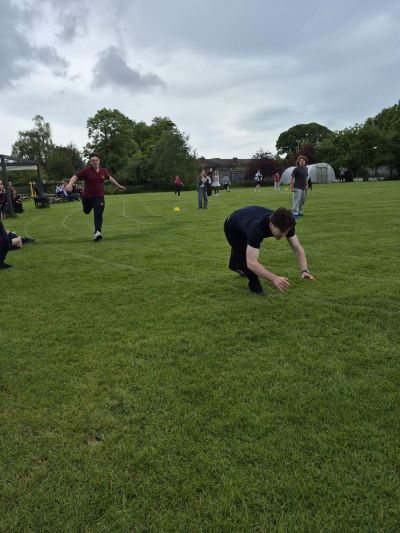
The sports strategy for Stratford College is based on a mixture of team and individual sports. Recent research from the Economic and Social Research Institute (ESRI) has shown that giving students the opportunity to participate in individual sports gives them the best chance of incorporating physical activity throughout their lives, as well as improving the likelihood of students continuing in education upon leaving secondary school.
Lunn, Kelly and Fitzpatrick published an ESRI report in September 2013 - 'Keeping Them in the Game: Taking Up and Dropping Out of Sport and Exercise in Ireland'. To quote the authors from their Executive Summary:
"Rates of participation in sport and exercise drop when students leave primary school and go on to second level. We estimate that the scale of this effect amounts to roughly one-in-ten regular participants dropping out, with those who continue to participate also, on average, reducing their number of activities. At this transition, however, an effect of television watching emerges: students who watch less than one hour a day are more likely to participate in sport and exercise, while those who do not watch television every day are more so again. (p. xii)
Dropping out from all sport and exercise activity is much more likely if a person participates in only team sport. The rate of drop-out from team sports played at school and college is severe. (p. xv)
Yet, over and above specific findings, a constant theme recurs in the data and throughout the analysis. Whether people remain active across their lifetimes is not primarily determined by whether they are active as children, but by transitions that occur as they grow up, mature and progress through adulthood. Work commitments are the most common reason given for dropping out from all types of activity. (p. ix)
The results show that participation in regular sporting activity is almost universal among primary school children – what happens subsequently is what matters. Many children drop out during the second-level years. Drop-out is faster among early school leavers. Children are more likely to give up extra-curricular sport at school than activities undertaken outside of school. Girls are more likely to drop out than boys. The public examination system has a strong negative impact on participation in sport: students are far less likely to participate during exam years and this has a lasting effect on participation later. Nevertheless, those who do play sport get, on average, better Leaving Certificate results. (p. vii)"
In addition, Lunn and Kelly have just published a report in May 2015 entitled - 'Participation in School Sport and Post-School Pathways' in the National Institute Economic Review. The authors found:
"... that the most important factor was not whether a student played extra-curricular sport during second-level, but whether they continued to do so in their final school years. We found that this latter group were more likely to continue their formal education after leaving school. The effect was large: continued participation in sport increased the likelihood of continuing in education rather than joining the labour market by 9-14 percentage points. (p. 3)"
See also: