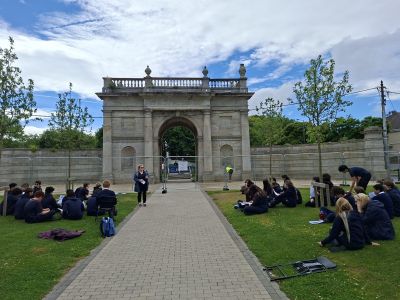
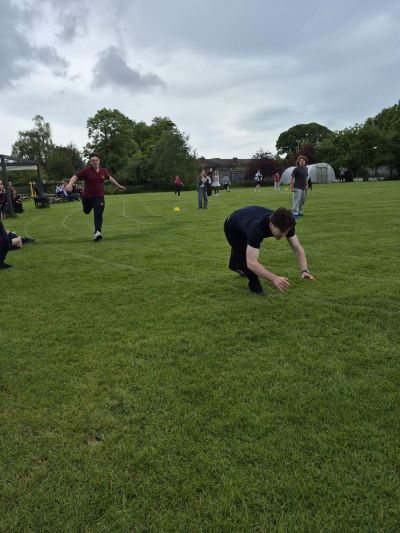
Our Transition Year English Class have recently started a public speaking module as part of their curriculum for the year. For the module, they cover a wide range of public speaking activities, including debating, improvisation and presentations. It exhibits everyone's argumentative skills and hopefully it will go a long way towards improving people's confidence when speaking.
They are assessed on their one minute speech on a topic randomly assigned to them, as they have nothing prepared, they are encouraged to rely purely on our own abilities and confidence as speakers. They are also preparing for the final part of our public speaking module, which is subject to choice. Suggestions range from dramatic monologues, PowerPoint presentations and demonstrations. Below are two examples. Sadbh Charles decided to teach an Abdominal Workout. She had to divide up her five minutes into structured activities i.e. warm up, demonstrations, re-cap and a cool down. Jake Long decided to teach the class how to do the Hauka. This was most enjoyable and informative. Firstly, the history of the Hauka was explained via a PowerPoint Presentation. Next we were asked to perform the Hauka in stages with the 'lyrics' projected overhead for our convenience. Needless to say, there were a few enquires re our class content, 'What's going on in there?'
Assignment:
Each student was provided with the marking criteria (see below) and they had to evaluate each other's performance; they also had to engage in self assessment too - indicating where their strengths and weaknesses were.
* Marking Criteria
50% = Content and format of presentation: inclusion of introduction, staged demonstration, audience participation and conclusion.
30% = Presentation Skills: Preparation, intonation, use of pause, voice projection, delivery and pace.
20% = Overall impression.
Peer teaching has many advantages. It is fun and students enjoy taking on the role of teacher. It prompts students to think about their own understanding of a topic and how they can help their peers understand. It encourages students to take more responsibility for their learning. In addition, it helps learners develop skills in communicating, information processing and working with others.
Ms. Reynolds