What is it?
Do you buy clothes just because of current trends? Do you discard your clothes months after buying them? Do you buy from shops without thinking where your product comes from or how they make it?
If so, you might be contributing to the problem of fast fashion. Fast fashion is a type of mass-produced fashion, produced by companies such as Zara, Penney's, or SHEIN, whose purpose is to be cheap, convenient, and disposable. Clothing that falls under fast fashion is usually part of a trend and does not typically last long.
The problem with fast fashion is that it encourages unsustainable buying habits and even pollutes the environment in and of itself. Because it is so quick and easy, consumers tend not to reuse clothing items that are fast fashion, which creates unnecessary amounts of waste. The mass production aspect also leads to squalid working conditions and even child labour.
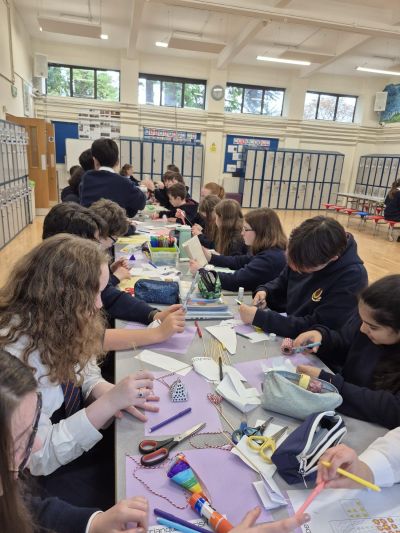
We have voted to talk about fast fashion as part of our CSPE CBA at our assembly. As a class, we have decided that fast fashion is an important issue in the world that we need to combat. We would like to promote sustainability in the school, and this is our approach to it.
Why is it bad?
Fast fashion has created a desire for young people to keep buying the latest and greatest, which has led to a throwaway culture. Does anyway know what % of clothes People throw away each year? ... 50% of clothing items within a year of purchasing them.
It does not help that fast fashion items are cheap. They do not last long and end up in landfill quicker. Reports show that 85% of textiles go into landfill each year. this is the problem with fast fashion – it is not sustainable.
With clothing being so cheap, consumers can buy more. Today, the average American buys about seventy pieces of clothing each year but spends
CO2 Emissions
- The fashion industry is responsible for 10% of global CO2 emissions each year. Researchers predict that if we don’t change these habits; a quarter of the world’s carbon budget will go towards fast fashion.
- Ireland’s fashion consumption increased by 40% between 1996 and 2012! This is a statistic we must change.
- What can we do to change this statistic? Our class decided to focus on trying to change the purchasing habits in our school.
To do this, we split ourselves into committees, and each committee had a certain task.
People went to charity shops and took pictures of clothes. They then posted them to our Instagram page to show the quality of charity shops. We conducted a survey asking people about their habits concerning fast fashion and made posters with more information on fast fashion. We created the hashtag #ThriftingWIthStratford.
With this, we hope to raise awareness to the growing problem of fast fashion and how it is affecting us and our planet.
Please start to make this change today, make sure the next item you buy is from a thrift shop. Thank you
Izzy, Tristan and Francis (2nd Year)