When French people use the phrase le monde est à nous, they are saying that ‘the world belongs to us’. The French language is full of such idioms and le monde est à nous means that there are infinite possibilities for us to achieve our potential; once we dispel the limits that we place upon ourselves. With this in mind, all students of first and second year French took control of revision for end of year exams by teaching their classmates and declared la classe est a nous!
Throughout the school year, students in first and second year were assessed on a continuous basis and they analysed their own understanding of key grammar and vocabulary concepts. Students learned that any mistakes that they may have made gave them the information they needed to design individual learning plans in order to improve, which they could carry out during a weekly class in the computer room.
The idea that making mistakes is central to the learning process as a 'step along the way' was acted out with great effect. By understanding and correcting the mistakes that they had made, students improved their understanding of tricky grammar concepts and achieved higher grades in exams.
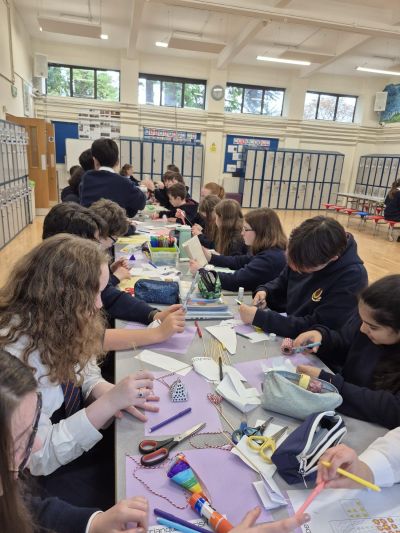
Towards the end of the school year, students were given an important section of revision for exams and worked in teams of five to design learning activities for the rest of the class. They wrote lesson plans which detailed the learning objectives for their class, the prior learning that they needed to ‘warm-up’ at the start of their class and they set homework for their classmates.
The creative minds of students in Stratford College were certainly in evidence and the activities that they designed were enjoyed by the whole class! Moreover, they were successful in revising difficult grammar concepts and key vocabulary.
Reflecting on this experience, I made an application to present at FÉILTE 2016, a showcase for innovation in education held by the Teaching Council in the RDS which was accepted. I will be assisted by two students from second year who will describe their participation in la classe est a nous to interested teachers from other schools across Ireland.
The overall aim of the project is to foster a sense of collective purpose among the group while encouraging students to take a lead role in their own learning. A ‘cross-pollination’ of assessment takes place on a systematic basis yet to a limited degree. Students in a mixed ability setting will have an opportunity to reflect on their classmates who may be a higher or lower attainment band than they are.
Assessment for la classe est à nous (10% of the end of year grade) is based on students preparation of their topic on a differentiated basis and not the performance of the class in the exam that they devise.
As the topics being taught by students are those which need to be revised for the end of year exams, the high attainment of certain students is realigned to the collective benefit of the group without compromising their right to excel.
Mr. Priestley